Sustainable Soil Management Practices
SLIDES
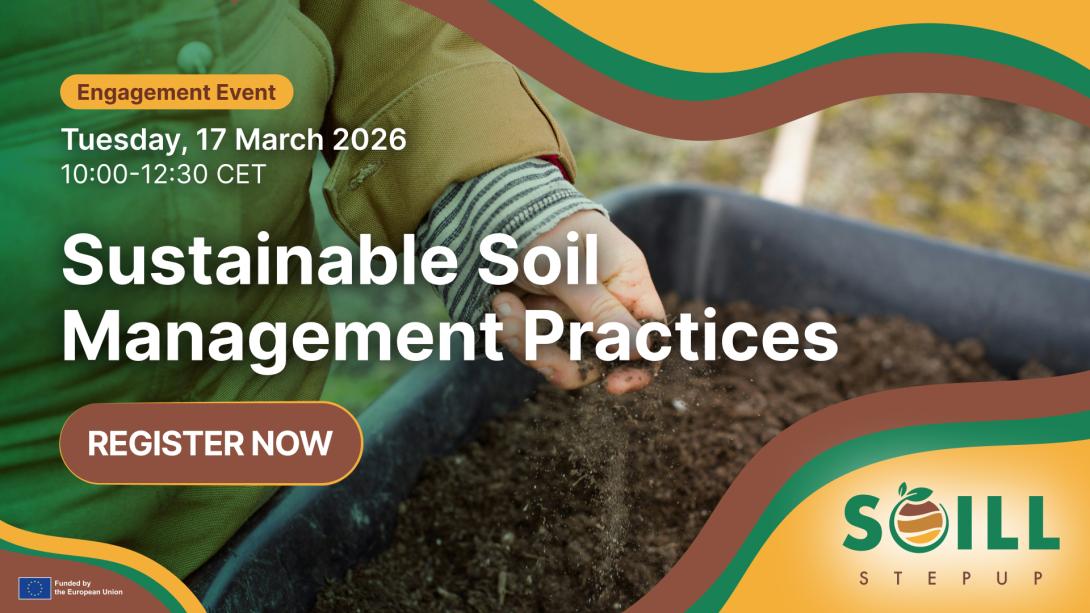
Healthy soils are the foundation of resilient food systems, biodiversity, climate adaptation, and sustainable land use. Yet soil degradation, erosion, loss of organic carbon, compaction, and pollution continue to threaten ecosystem services and long-term productivity across Europe. In this context, the EU Mission "A Soil Deal for Europe" promotes the scaling of Living Labs and Lighthouses as practical, multi-actor ecosystems where solutions can be co-designed, tested, and adopted in real-life settings.
This event supported the establishment and development of Mission Soil Living Labs and aimed to help prospective applicants prepare strong proposals for the 2026 funding opportunities dedicated to the setup of Mission Soil Living Labs. This online thematic engagement event focused on sustainable soil management practices, aiming to bridge scientific knowledge, practical implementation, and policy priorities, and - above all - help participants identify collaboration opportunities for consolidating consortia.
Recording
Objectives
The event aimed to increase shared understanding of sustainable soil management practices and their role in achieving soil health targets by 2030, as well as showcase complementary perspectives on soil resilience and soil monitoring approaches relevant to Living Lab implementation. SOILL-Stepup intended to provide applicants with an overview of the current Mission Soil funding opportunities and the SOILL support services available to them. The engagement event facilitated networking and consortium-consolidation through a structured pitching session.
Target audience
The event was primarily designed for stakeholders interested in applying to Mission Soil topics funding the establishment of Living Labs and Lighthouses. Regional and local authorities and public agencies working on land use, agriculture, environment, or climate action were thus welcome to join as researchers, universities, and applied research organisations. The event content was of interest for land managers and advisory services (farmers, cooperatives, foresters, planners), but also SMEs, start-ups, and innovation providers offering soil-relevant solutions, as well as NGOs, networks, and associations supporting sustainable land management.
Value for participants
Participants gained practical insights into key soil management approaches and how they translated into Living Lab action. They also received clear guidance on how SOILL supports applicants (through tools such as the Helpdesk and the B2Match matchmaking platform) and had the opportunity to connect directly with potential partners.
Agenda (CET)

- Mission, vision, and collaborative structure of SOILL
- Overview of the SOILL-Startup and SOILL-Stepup projects
Speakers:
Gianpiero Petruzziello
European Regions Research and Innovation Network (ERRIN)
SOILL
Thematic blocks:
- Sustainable practices for soil regeneration
- Measuring, monitoring and managing healthy soils
Speakers:

Fernando Monroy
Council for Agricultural Research and Agricultural Economics (CREA)
SOILL

Nikolaos Toumasis
Cranfield University
SOILL
An overview of the 2026 Mission Soil funding opportunities and the SOILL supporting services, including the Helpdesk and B2Match Platform for identifying potential project partners.
Speakers:

Kinga Sepielak
Krakow Technology Park
SOILL
Pitchers introduce their organisation, ask for collaborations and offer their expertise in short presentations.
Have you heard about the catalogue?
To further showcase the outstanding work of these pioneers, SOILL has published the Catalogue of Mission Soil Living Labs and Lighthouses. This publication offers a comprehensive overview of the planned work, scope, and ambitions of these Living Labs as they embark on their journey.
For each Living Lab, the catalogue details target land use types, relevant Mission objectives, key strengths, and planned improvement techniques, serving as a valuable resource for anyone interested in their work. By offering insights into each project's specific goals, the catalogue aims to foster greater collaboration and connect a continent-wide community of innovators, and reflects a shared European commitment to tackling pressing soil challenges.